
Is It Narcissistic Abuse, or Am I Overreacting?
For the woman who keeps apologizing, second-guessing herself, and wondering why everyone else sees a different person.
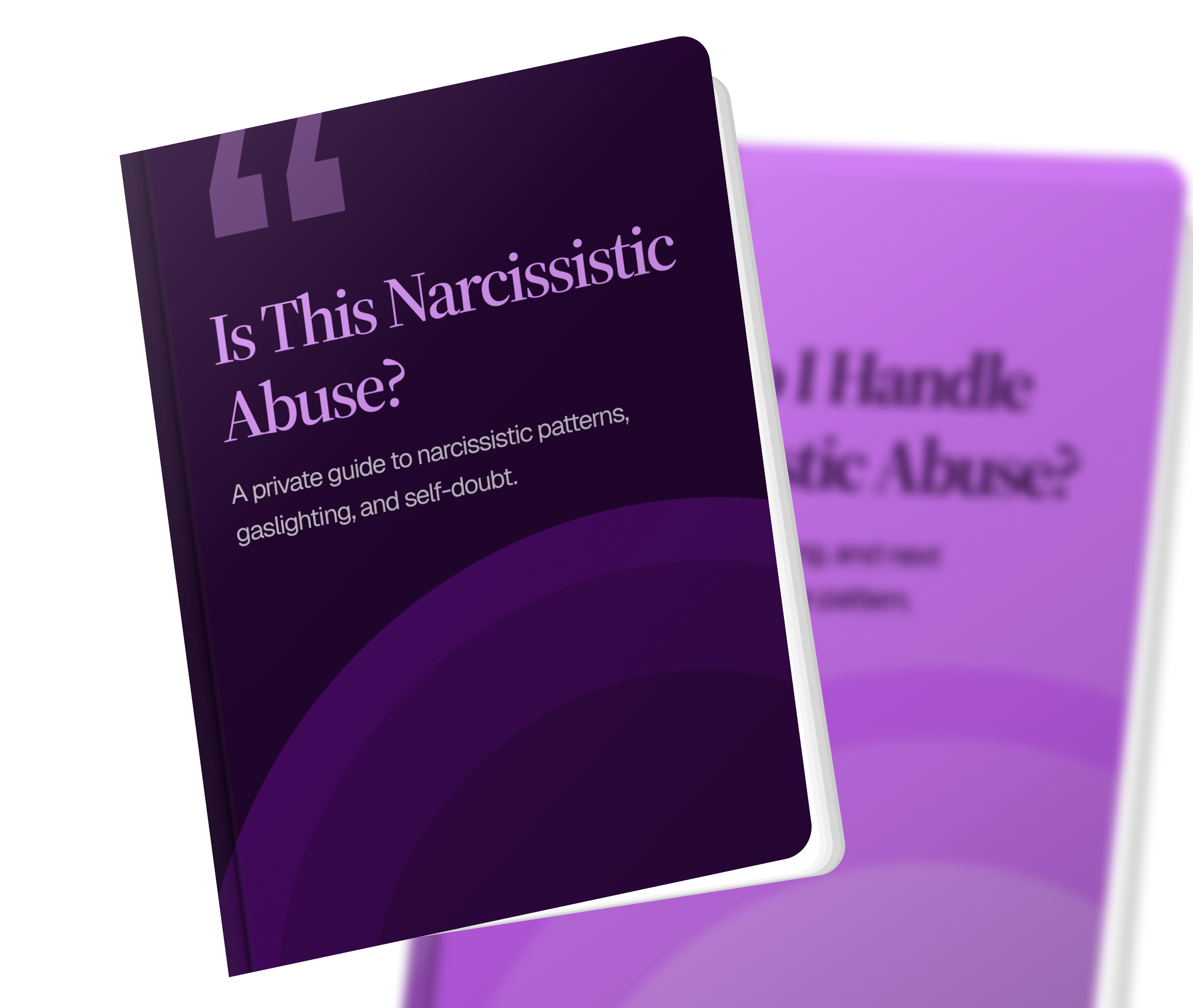
Am I the problem, or is it him?
Is it all in my head?
Can this relationship be saved?
Am I the only one feeling this?
Why does everyone see a different person?
Many women ask these questions in relationships that look fine from the outside.
You are not alone, and you do not have to keep guessing. We prepared this ebook to help you see whether the pattern is conflict, confusion, or something more controlling.
01 Introduction: You're Not Crazy
.BuIawsD-.jpg)
“If you keep asking whether you are overreacting, pause there. That question usually does not appear in relationships where your reality is consistently respected.”
02 What Narcissism Actually Looks Like
.BZtJafk0.jpg)
“Narcissistic abuse is often quiet from the outside. It can look like charm, confidence, and devotion until you are the only one seeing the private pattern.”
03 How It Starts: Love Bombing
.CuVKEbxs.jpg)
“Love bombing does not always feel like pressure. Sometimes it feels like finally being chosen, seen, and understood faster than your nervous system can question it.”
04 The 15 Signs
.DHN_GWhF.jpg)
“One sign by itself may not tell the whole story. The pattern matters: how often it happens, what it costs you, and whether repair ever truly follows.”
05 The Cycle
.7pvPrnQr.jpg)
“The cycle keeps you looking backward for the version of the relationship that felt safe. That memory becomes the hook.”
06 The Tactics Explained
.DLRzGSpA.jpg)
“Once a tactic has a name, it becomes easier to spot in real time. You stop arguing with the fog and start seeing the structure.”
07 Why You? This Is Not Your Fault
.DfA8liov.jpg)
“Being caring did not cause the abuse. Wanting to understand someone does not mean you consented to being confused, blamed, or diminished.”
08 Self-Assessment Checklist
.Db6XRK4f.jpg)
“The checklist is not here to label another person. It is here to help you notice what your body and memory have been trying to organize.”
09 What Comes Next
.DQ_Gc-pb.jpg)
“Clarity does not force one dramatic decision. It gives you a steadier place to stand before you choose the next safe step.”
Choose your version
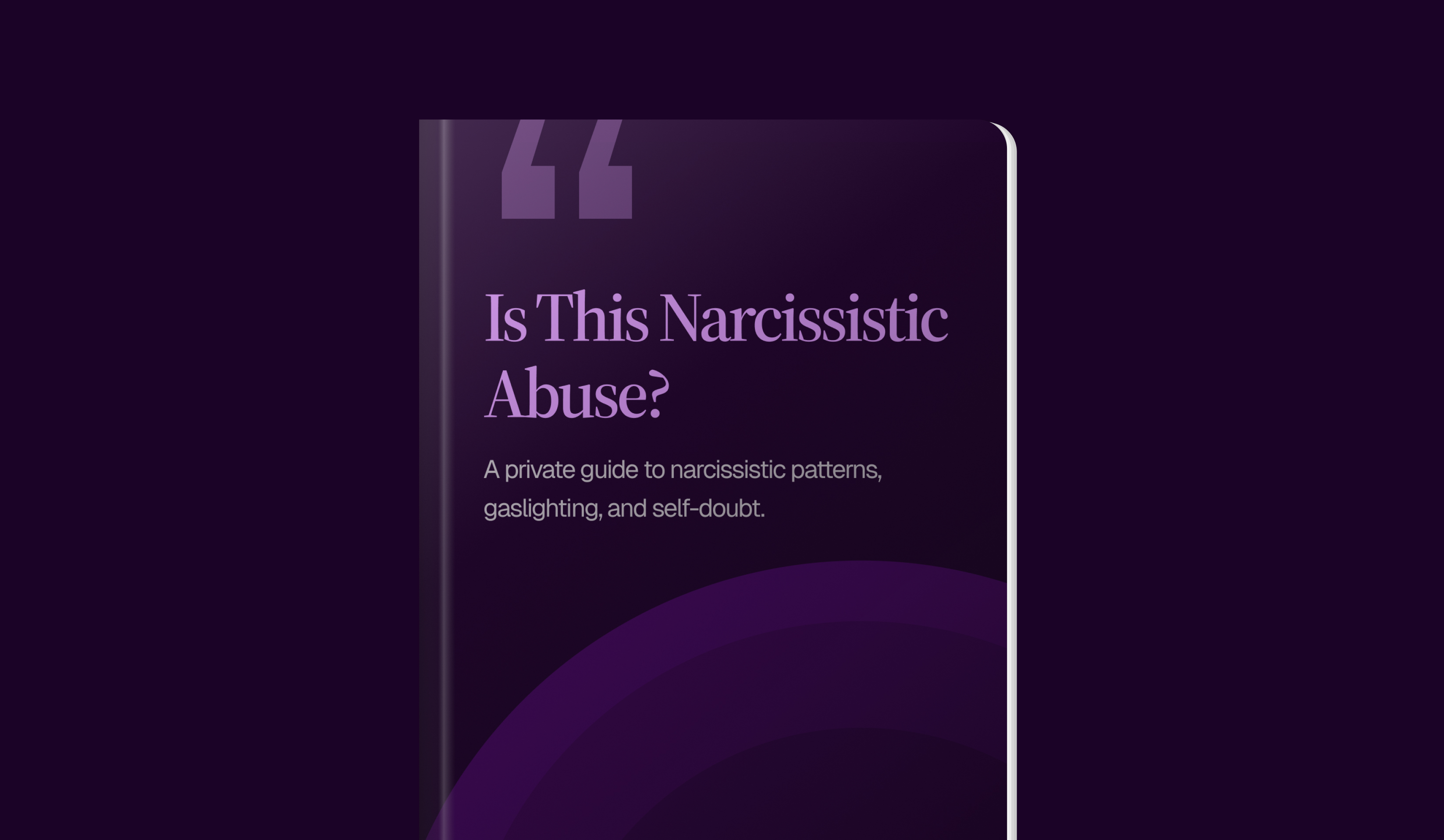
Clarity Guide
$19.99
$29.99
Save $10
Understand whether the pattern is real, what it is called, and why you keep doubting yourself.
- 15 signs, no overthinking
- A scoreable reality check
- The cycle, in plain English
- Your next safest step
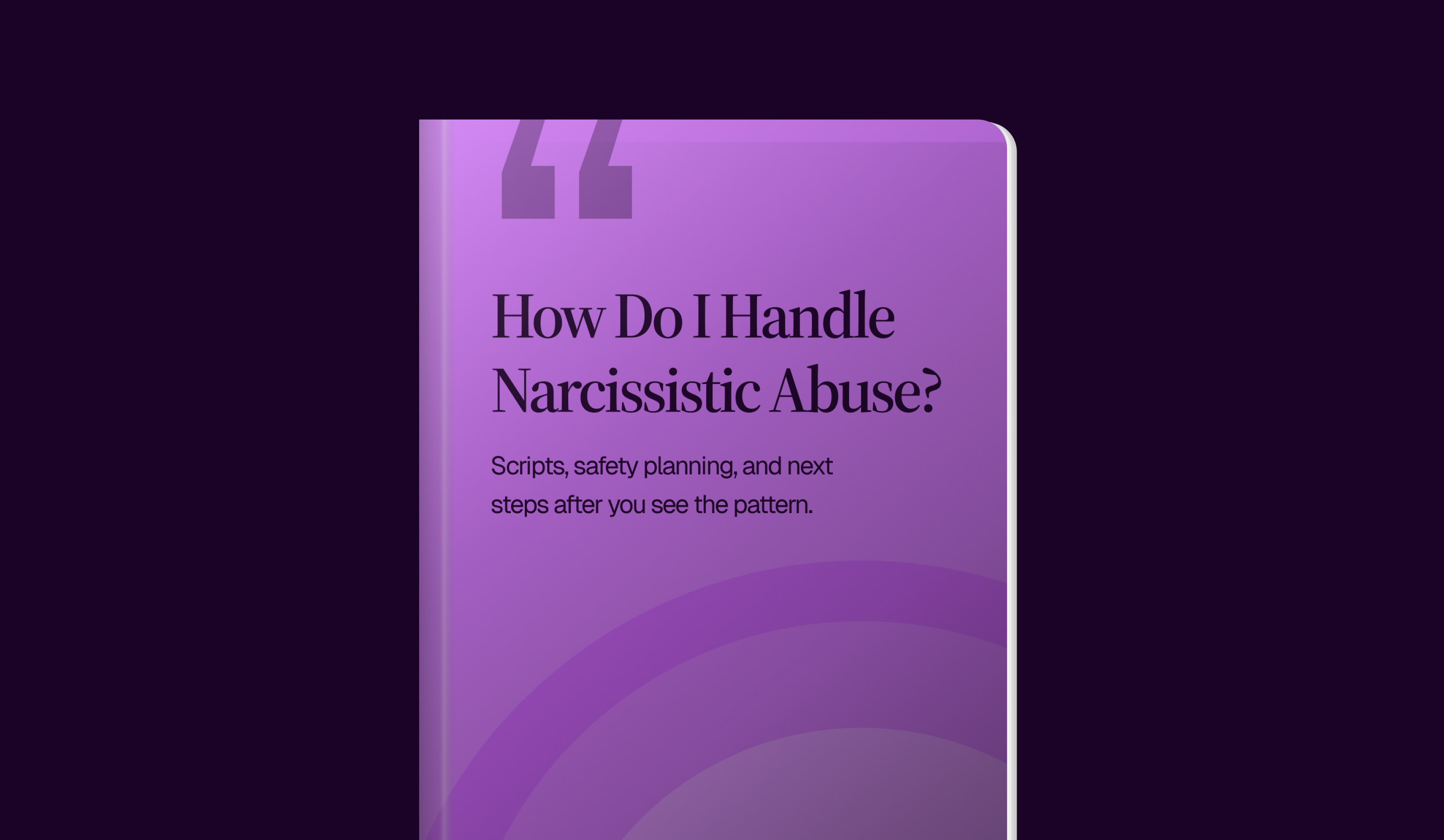
Next Step Toolkit
$36.99
$49.99
Save $13
Know what to do next: scripts, boundaries, safety planning, and steps for getting your strength back.
- Scripts when he twists it
- Quiet safety planning
- Support, leaving, and healing
- Red flags for what comes next
Best value
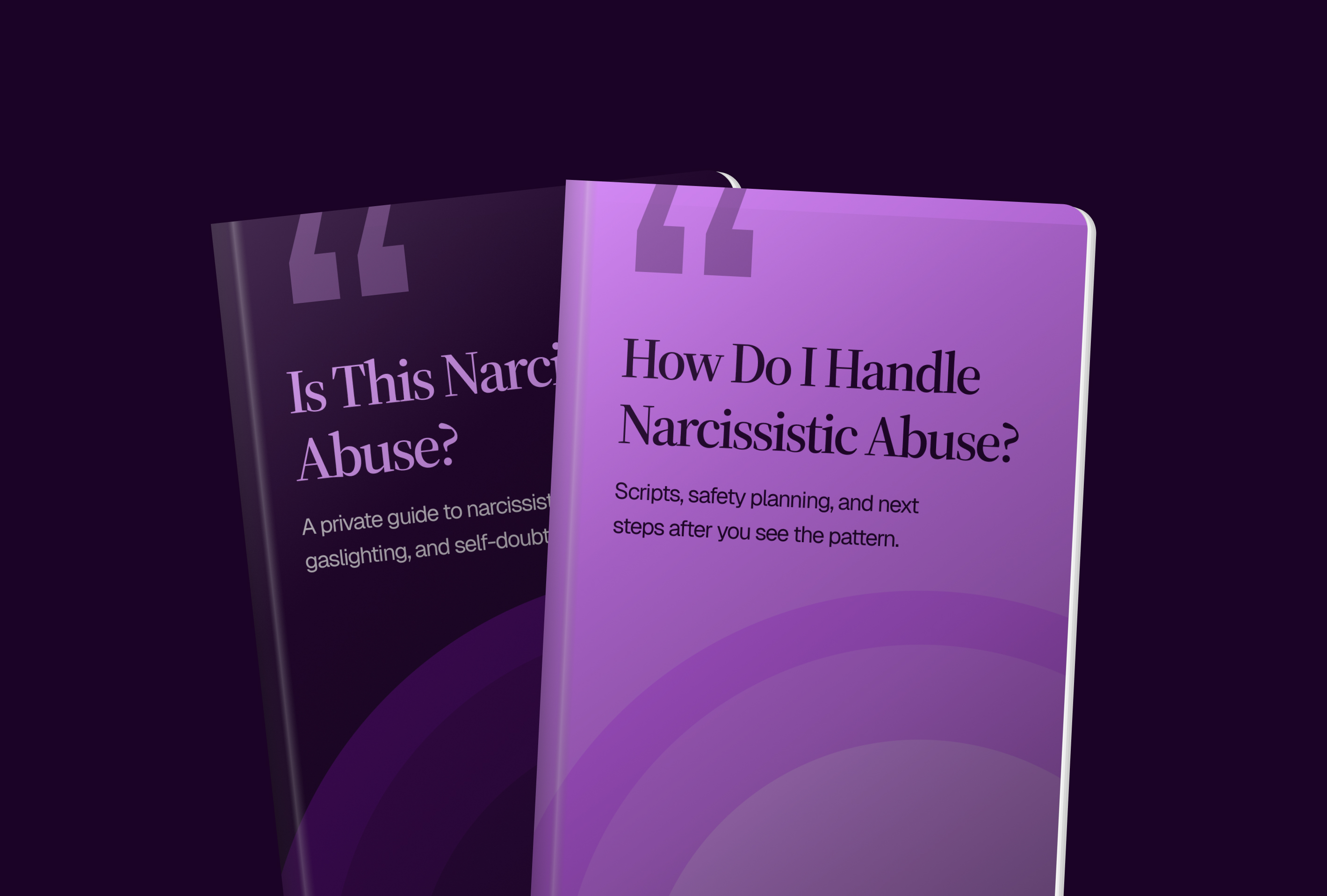
Clarity + Toolkit Bundle
$44.99
$56.98
Save $11.99
First understand what is happening. Then get the practical plan for what to do next.
- Both ebooks together
- Clarity first, action next
- The full path in one place
This guide is educational and not therapy, legal advice, emergency support, or domestic violence advocacy. If you feel unsafe, use a safer device if possible and contact local emergency or domestic violence support.
Reader stories
It helped them put words to what felt impossible to explain.
“I kept thinking I needed one more conversation to explain myself better. After reading the guide, I finally saw why those conversations always ended with me apologizing. It did not push me into one dramatic decision. It helped me slow down, name what was happening, and stop treating my confusion like proof that I was the problem.”
“The part about the public version and the private version hit me the hardest. Everyone around us saw someone charming and helpful, so I felt ashamed even admitting how small I felt at home. The book gave me language I did not have before. I could read a page and think: yes, that is exactly the pattern.”
“I bought it because I was exhausted from replaying arguments in my head. What helped me most was that it did not make me feel stupid for staying or hoping things would change. It explained the cycle in a calm way, and the toolkit helped me think about next steps without panicking.”
“I expected something clinical, but it felt private and human. The examples were close enough to my own relationship that I stopped minimizing the things I had been brushing off. I still had decisions to make, but I felt less alone and more grounded after reading it.”
Questions
Why is everything always my fault, even when I did nothing wrong?
It is incredibly exhausting to constantly defend yourself. If you find yourself apologizing for things you did not do just to keep the peace, you are caught in a very specific communication trap. It is not because you are flawed or making mistakes. Our guide explains the exact mechanics of this blame-shifting tactic and shows you how to stop engaging in arguments you can never win.
Why does he act like two completely different people?
Seeing him be charming and helpful to everyone else, while being cold or critical to you behind closed doors, can make you feel completely isolated. It makes you wonder which version of him is the real one. You are not imagining this contrast. In the e-book, we break down exactly why this dual behavior happens and how to stop letting it make you doubt your own sanity.
Why is it so incredibly hard to leave, even though I'm completely exhausted?
Many women feel intense guilt for staying in a relationship that drains them. But your inability to walk away is not a sign of weakness. It is the result of a powerful psychological dynamic: a hidden cycle of highs and lows that keeps you emotionally locked in. Inside the book, we reveal what this hidden bond is and give you gentle, actionable steps to start regaining your strength.
Why does he punish me with days of silence over minor things?
The silent treatment is one of the most painful experiences in a relationship. It leaves you feeling invisible and desperate to fix things, even if you do not know what you actually did wrong. It is not just a mood, it is a highly effective control tactic. Our guide reveals exactly why he uses silence against you and gives you tools to protect your peace when it happens.
Will we ever get back to how amazing it was at the beginning?
This is the most common question women ask. The beginning of the relationship likely felt like a fairy tale, and it is completely natural to hold onto the hope that you can fix things and get that perfect phase back. However, understanding why that intense early phase happened is crucial for your healing. We dedicate an entire chapter to explaining this cycle, giving you the clarity you need to finally move forward.